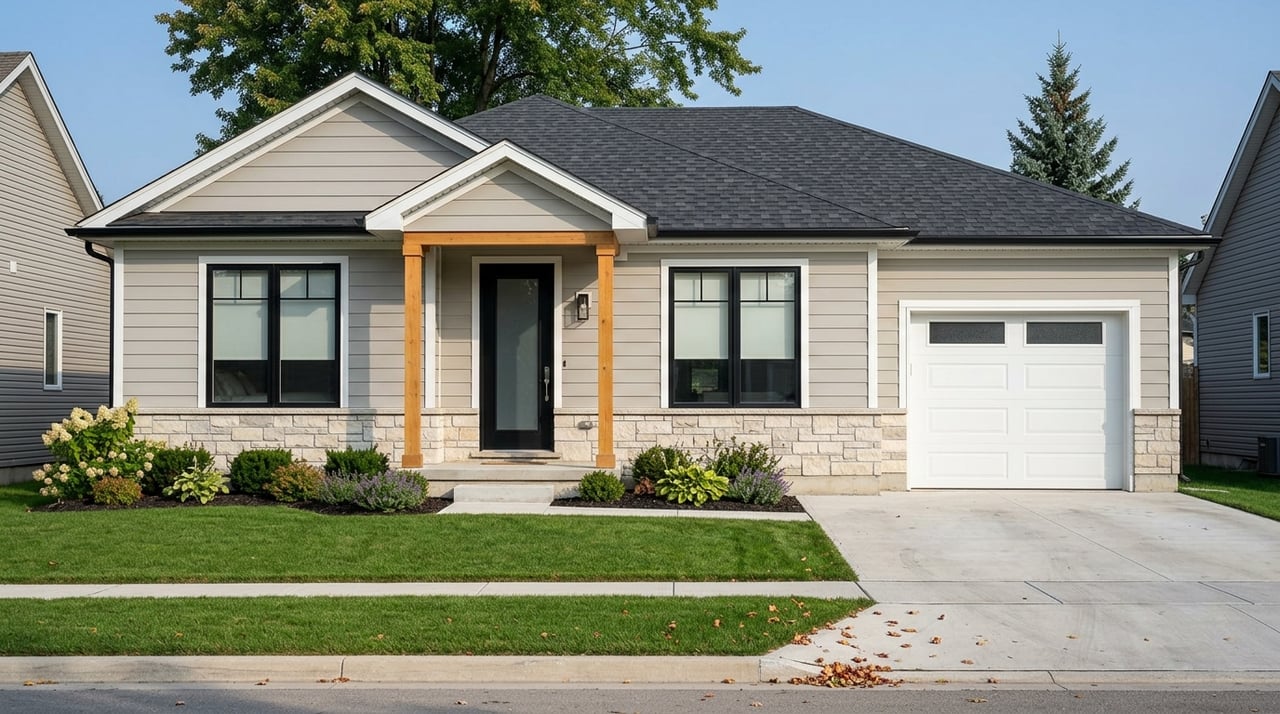
Green Bay Vs Appleton: How The Housing Markets Differ
June 4, 2026
June 4, 2026
Trying to decide between Green Bay and Appleton? At first glance, the housing markets can look pretty similar, especially if you are just comparing headline sale prices. But once you dig deeper, the differences become clearer. If you are buying, selling, or relocating in northeastern Wisconsin, understanding those differences can help you choose the market that fits your budget, home style, and goals. Let’s dive in.
If you look at recent sales, Green Bay and Appleton are closer than many buyers expect. Green Bay’s median sale price was $284,453, while Appleton’s was $289,850. Price per square foot was also close, at $173 in Green Bay and $178 in Appleton.
That said, broader home value data shows a wider gap. Zillow’s average home value came in at $282,595 for Green Bay and $343,140 for Appleton. In simple terms, Appleton reads as the higher-value market overall, while Green Bay tends to offer a lower entry point.
For many buyers, that makes this a budget conversation first. If you want to stretch your dollars further, Green Bay may give you more room to work with. If you are comfortable shopping in a higher-value market, Appleton may offer more options that fit a detached-home focus.
Both markets are competitive. Redfin classifies Green Bay and Appleton as very competitive, with Appleton scoring 79 on its Compete Score and Green Bay scoring 72.
That means you should expect well-priced homes to get attention in either city. Buyers need to be prepared, organized, and ready to move when the right property appears. Sellers in both markets still benefit from strong pricing strategy and polished presentation.
Green Bay has a more varied housing mix than many people realize. According to the city’s housing data, 58% of units are detached homes, and the rest includes meaningful shares of two-unit, three- to four-unit, and larger multifamily housing.
That variety can matter if you are looking for flexibility. Whether you want a traditional single-family home, an entry-level option, or a property with a different layout or maintenance profile, Green Bay generally offers a broader spread of housing types.
Green Bay also has a 56% owner-occupied and 44% renter-occupied split. That supports the idea that the market includes a wider mix of owner and rental housing than a more heavily detached, owner-focused market.
Appleton’s housing stock is more concentrated in detached homes. The city reports that about 69% of its housing is single-family detached, with about 67% owner-occupied housing.
Appleton also notes that only about 6% of its stock falls into missing-middle formats such as duplexes, fourplexes, and townhomes. So if your search is centered on a detached home in a primarily owner-occupied setting, Appleton may line up more closely with what you have in mind.
This is one of the biggest practical differences between the two cities. Green Bay offers more variety in housing types, while Appleton leans more strongly toward detached homes.
Neither city is a brand-new housing market. Green Bay reports that nearly 70% of its housing was built before 1980, and Appleton says 64% of its housing was built before 1970.
For buyers, that means you may see more established homes, mature lots, and properties with a range of update levels in both cities. In Green Bay especially, older housing stock is a major part of the story, which can mean more opportunities for buyers who are open to repairs or improvements.
For sellers, older homes often need thoughtful positioning. In Green Bay, presentation and repair strategy can be especially important if your home needs updating. Clean staging, strong photography, and a realistic pricing plan can make a meaningful difference.
Appleton appears to have more active for-sale inventory based on the latest Zillow snapshots. The platform showed 499 listings in Appleton compared with 224 in Green Bay.
Because those snapshots were updated on different dates, this works best as a directional comparison, not a same-day count. Even so, it supports the idea that Appleton may give buyers a broader active selection at a given moment.
Appleton also reports a pent-up supply gap of 2,114 units. That helps explain why demand pressure can still be strong even when more listings are available. More inventory does not always mean an easy market.
If you are choosing between these two cities based on commute, the data suggests the difference is usually small. Green Bay’s mean travel time to work is 19.2 minutes, while Appleton’s is 19.3 minutes.
In other words, this is usually not a story about one city saving you a major amount of time each day. It is more about which side of the Fox Valley corridor fits your life, work pattern, and preferred home search area.
WisDOT describes the region as a connected I-41 corridor linking Green Bay, Appleton, Oshkosh, and Milwaukee. That regional connection makes cross-city commuting feasible, although it also means many households rely on the highway network.
Geography shapes how each market feels day to day. Green Bay spans 45.48 square miles, while Appleton covers 24.79 square miles.
Appleton is also denser, at 3,051.5 people per square mile compared with Green Bay’s 2,361.4. That helps explain why Appleton often feels more compact, while Green Bay can feel more spread out with a wider city footprint.
That difference can influence your search experience. Some buyers prefer a more compact layout with connected amenities, while others like a market that feels broader and more varied across neighborhoods and housing pockets.
Green Bay presents itself as the flagship city and economic hub of northeastern Wisconsin. The city highlights 70 parks and trails, Bay Beach, the City Deck, the Botanical Garden, Lambeau Field, cultural venues, and more than forty neighborhood associations.
For buyers, that points to a city with a broad menu of amenities and a wide range of established neighborhood settings. If you want a larger city identity with plenty of local destinations and housing variety, Green Bay may stand out.
Appleton’s city tools emphasize walking routes, trail mapping, historic inventory resources, park mapping, and transit timetables. That suggests a more compact, connected daily feel.
If you like the idea of a city that feels more route-oriented and amenity-connected, Appleton may be appealing. Its housing stock and geography support that more compact impression.
Household income data gives useful context for why Appleton often carries a higher value ceiling. Green Bay’s median household income is $66,206, while Appleton’s is $80,483.
Poverty rates also differ, at 14.7% in Green Bay and 8.3% in Appleton. While many factors shape housing values, this higher income base in Appleton likely helps support its stronger overall home-value readings.
For buyers, that means Appleton may feel like a higher-cost market even when recent sale prices look close. For sellers, it helps explain why Appleton can support higher values, but it does not remove the need for smart pricing and strong marketing.
For most buyers, this choice comes down to budget and housing style more than commute time. For most sellers, it comes down to understanding how your home fits local inventory, pricing, and buyer expectations.
If you are weighing Green Bay against Appleton, local guidance can make the comparison much easier. The team at Batterman Integrity Group can help you compare neighborhoods, understand current market conditions, and build a smart buying or selling plan with clear, concierge-level support.
Stay up to date on the latest real estate trends.

Buying & Selling / Homeownership
Smarter Decisions. Stronger Homes. (Presented by Batterman Integrity Group + StructSolve Engineering)

Buying & Selling / Homeownership
Smarter Decisions. Stronger Homes. (Presented by Batterman Integrity Group + StructSolve Engineering)
Get assistance in determining current property value, crafting a competitive offer, writing and negotiating a contract, and much more. Contact us today.