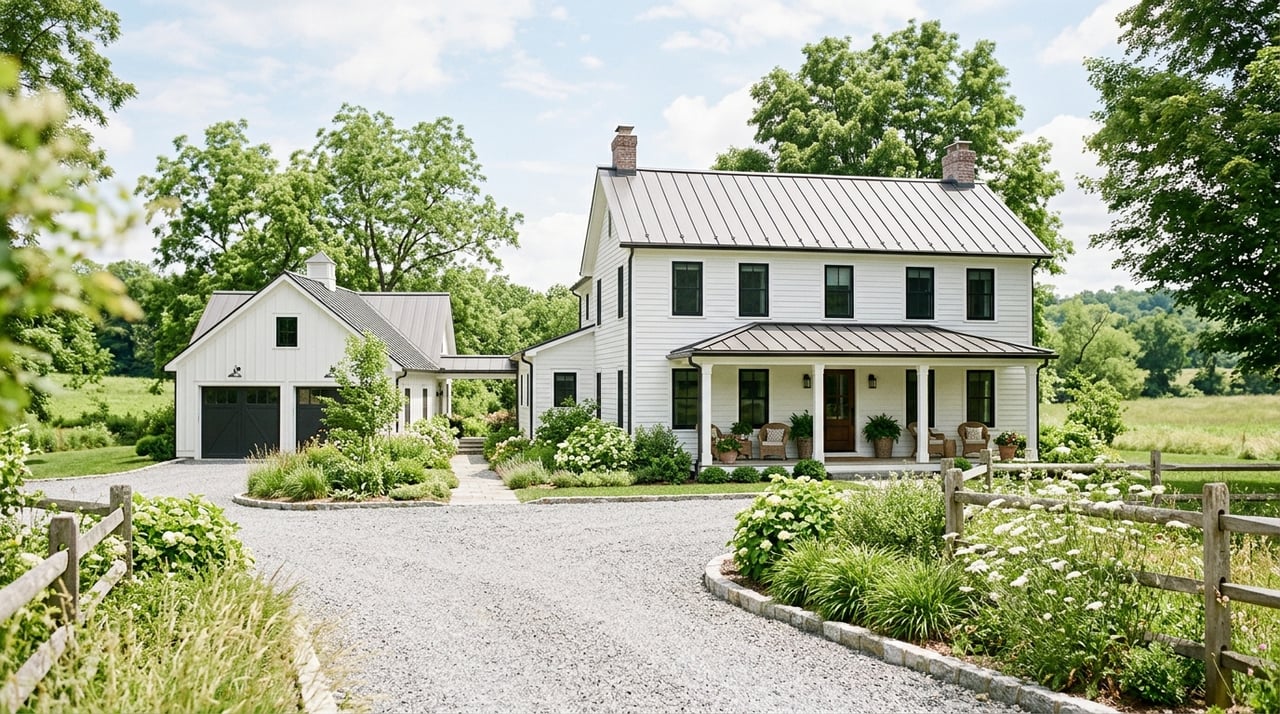
How to Sell a Rural Home Near Hortonville With Strategy
June 18, 2026
June 18, 2026
If you are selling a rural home near Hortonville, you are not just selling square footage. You are selling the house, the land, the outbuildings, the access, and the lifestyle that comes with the property. That can feel like a lot to organize, but with the right plan, you can present the full value of your property clearly and confidently. Let’s dive in.
A rural listing near Hortonville often comes with details that do not show up in a typical in-town sale. Buyers may be looking at acreage, barns, sheds, fencing, approach roads, private well information, and onsite wastewater systems along with the home itself.
That matters in Outagamie County, where rural parcels may be affected by county zoning, sanitary, stormwater, shoreland, floodplain, and land-division review. In other words, your marketing needs to help buyers understand more than the house. It needs to explain the whole property in a simple, organized way.
One of the smartest things you can do before listing is gather your documents early. Rural buyers often want clarity on the systems and improvements that support the property, and having records ready can help reduce delays later.
Useful records may include:
In Wisconsin, seller disclosure rules generally apply to farms and other properties with living quarters, and the Real Estate Condition Report must be provided within 10 days after acceptance. Having your paperwork organized from the start can make that step much smoother.
Many rural homes in the Hortonville area rely on private wells and onsite wastewater systems. These are normal features of country properties, but they are important parts of the sale because buyers often have questions about maintenance, testing, and condition.
According to the Wisconsin DNR, private wells are usually the homeowner’s responsibility, and annual testing is recommended. Transfer-time well inspections are optional, although some lenders may require them. If an inspection is done, it must be completed by a licensed well driller or pump installer.
Outagamie County states that septic maintenance is conducted once every three years or when sludge reaches one-third of the tank volume. For sellers, this means maintenance history is not just helpful. It is part of presenting the property as well cared for.
Rural marketing works best when the full property looks intentional and easy to understand. That includes the home itself, but it also includes the land that surrounds it.
The 2023 Profile of Home Staging found that common prep steps include decluttering, whole-home cleaning, removing pets during showings, landscaping, minor repairs, and professional photos. On a rural property, that list usually extends farther.
Before listing, focus on areas such as:
A buyer’s first impression often starts before they reach the front door. If the driveway is hard to navigate or the outbuildings feel cluttered, buyers may assume the rest of the property has been harder to maintain too.
One of the biggest mistakes in rural home sales is treating the property like a standard suburban comp. A home on acreage near Hortonville needs a pricing strategy that separates the value of the improvements from the value of the land.
That means comparing like with like. Square footage matters, but so do acreage size, land use, outbuildings, access, and the property’s overall utility. A strong rural market analysis should look at those pieces individually instead of rolling everything into one rough number.
Recent Wisconsin land-sale data shows why this matters. In 2024, agricultural land without buildings averaged $8,937 per acre when it continued in agricultural use, but $19,083 per acre when diverted to other uses. Forest land averaged $3,668 per acre continuing in forest use and $5,793 per acre when diverted.
Those numbers do not set the value of any one property, but they show that land-use potential can affect pricing. For a Hortonville-area property, especially one near growth corridors, acreage may carry value beyond simple farm utility.
Buyers need to understand a rural property quickly, especially if they are comparing several homes online before choosing where to visit in person. Strong visuals help them make sense of the home, the layout, and the land in one pass.
NAR’s 2023 staging report found that 89% of sellers’ agents said photos were the most important listing asset. The same report found that 81% of buyer’s agents said staging made it easier for buyers to visualize a property as a future home.
For a rural listing near Hortonville, the most useful visual package often includes:
Aerial marketing can be especially valuable for country properties because ground-level photos rarely tell the full story. If drone photography is used for business purposes, the operator must follow FAA rules for commercial operations.
Many rural buyers do a lot of research before they schedule a showing. Some may be moving from another part of Wisconsin, and others may be comparing Hortonville-area homes with options closer to Appleton or elsewhere in the Fox Valley.
That is why digital marketing matters so much. NAR found that buyers typically expected a median of 12 virtual viewings and seven in-person home viewings. The same report also found that 96% of respondents said at least some buyers consulted family members during the buying process.
That tells you something important. Your listing needs to be easy to understand even when the decision-makers are not standing on the property together. Clean photos, strong descriptions, and thoughtful presentation can help your home make sense to every person involved.
Showing a rural home usually takes more coordination than showing an in-town property. You may need to think through parking, gate access, driveway turnaround space, pets, livestock, or equipment before the first buyer arrives.
That may sound small, but these details affect the experience. If showings feel confusing or hard to navigate, buyers may spend more time managing the visit than noticing the property’s best features.
A smoother showing plan often includes:
When buyers can move through the property without distractions, they are more likely to picture themselves owning and using it.
Rural buyers often pay close attention to boundaries, access, and how the parcel is laid out. That is one reason it helps to review GIS maps, tax records, and legal descriptions before your home goes live.
Outagamie County’s Development and Land Services department provides GIS maps along with property and tax information. Reviewing those details early can help you and your agent spot inconsistencies, clarify land-use questions, and market the property with more confidence.
The best marketing for a rural home near Hortonville is not flashy for the sake of being flashy. It is clear, complete, and built around the way buyers actually evaluate country properties.
That means documenting systems, cleaning up the land, pricing acreage thoughtfully, using strong visuals, and planning showings with care. When all of those pieces work together, buyers can see the value of your property more quickly and more clearly.
If you are preparing to sell, the goal is simple. Make it easy for buyers to understand what makes your property special and how it fits their needs. That is the kind of marketing that works.
When you want a local team that understands how to present rural homes with strategy, staging, photography, and high-touch service, connect with Batterman Integrity Group.
Stay up to date on the latest real estate trends.

Buying & Selling / Homeownership
Smarter Decisions. Stronger Homes. (Presented by Batterman Integrity Group + StructSolve Engineering)

Buying & Selling / Homeownership
Smarter Decisions. Stronger Homes. (Presented by Batterman Integrity Group + StructSolve Engineering)
Get assistance in determining current property value, crafting a competitive offer, writing and negotiating a contract, and much more. Contact us today.