Lake Winnebago Winter Staging Ideas Near Menasha
January 1, 2026
January 1, 2026
Selling a lake home near Menasha in the middle of winter can feel like an uphill climb. Short days, snow, and icy shorelines add extra hurdles. The good news is that buyers shop year-round for Lake Winnebago properties, and a thoughtful winter presentation can make your listing stand out. In this guide, you’ll learn practical, local staging steps, photo timing that flatters your home, and safety tips that keep showings smooth. Let’s dive in.
Lake Winnebago winters bring cold temps, snow, and limited daylight. That means first impressions often happen online, and what buyers see must feel bright, warm, and inviting. You want to show clear views of the water and highlight features that make winter living comfortable.
With fewer listings on the market in winter, strong staging and photography help you compete. A polished presentation can draw more attention, more showings, and better offers when it counts.
Buyers need to see the water. Carefully prune small branches to frame views without removing important shoreline vegetation. Before any major trimming or shoreline work, check local zoning and Wisconsin DNR rules so you stay compliant. Native buffers help with stability and privacy, which many buyers value.
Clear the driveway, walkways, steps, and the safest route to the front door and lakeside areas. Keep the look clean and intentional by shoveling edges neatly. Near the shoreline, favor sand or stone grit instead of chloride-based de-icers to avoid runoff into the lake. Tidy any dock steps without heavy scraping that leaves visible damage.
Point out what makes winter easier. If you have a heated garage, mudroom, gear storage, or proof of winterized docks and systems, make them visible. A few tasteful seasonal cues like neatly stacked firewood or a warm throw on a covered porch signal comfort without clutter.
Your goal is to remove slip risks and guide buyers with ease. Shovel and treat primary walkways first, then add clear signage for any steps to the dock if you allow access. Place a sturdy boot tray and a mat near the entry so visitors can remove wet footwear. Keep a small towel and extra mat handy to catch drips between showings.
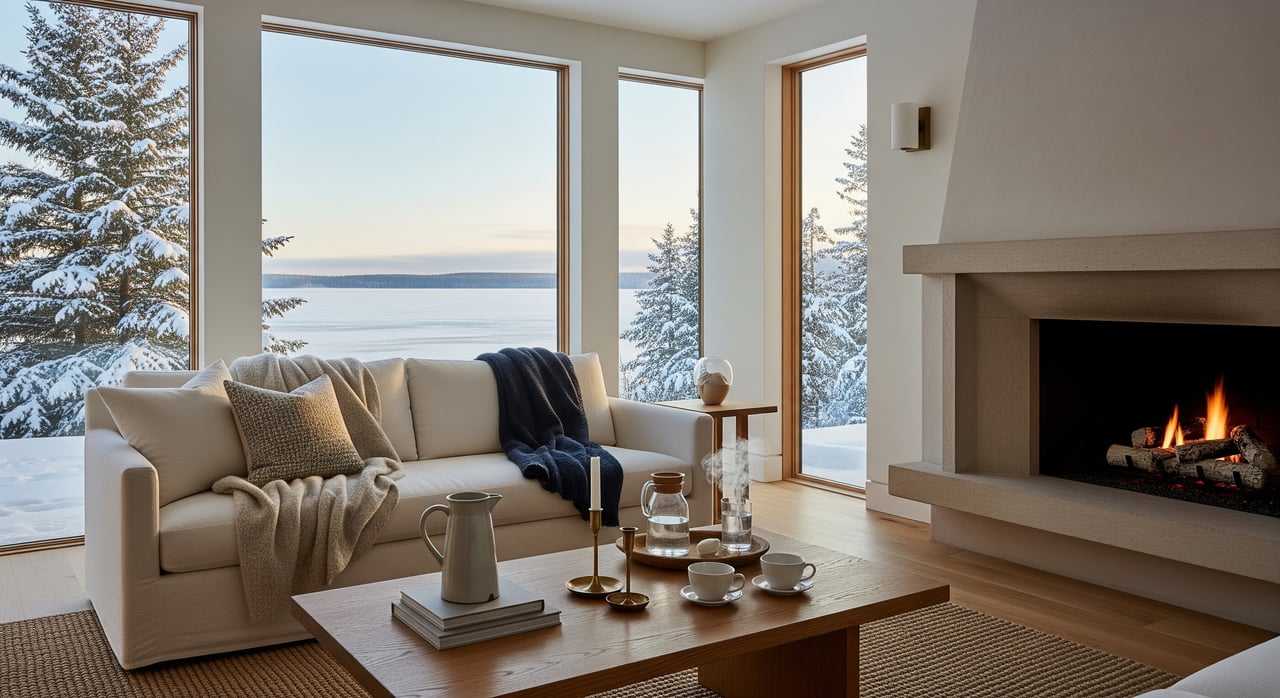
Set a welcoming scene with layered throws, textured pillows, and warm bulbs in table and floor lamps. If you have a fireplace or radiant floors, showcase them. Soft pools of light in living and dining areas add a cozy glow that photographs well.
Make windows the star. Clean glass to remove salt or snow streaks and pull back curtains so the water view takes center stage. Arrange seating to face the view. If you have a breakfast nook, set two mugs and a folded wool blanket to suggest a quiet winter morning.
Skip bright or dated holiday decor. Choose neutral, seasonal pieces that do not distract from the home. A pine bough in a vase, a knit throw, and a muted winter wreath are enough. Pack away personal collectibles so rooms feel calm and spacious.
Winter’s low sun can be your friend. Plan exterior photos 30 to 60 minutes before sunset and into civil twilight for warm sky tones and reflections on snow. Interior twilight photos often look best in the 20 to 40 minutes around sunset when indoor lights balance the fading light outside. A dawn session is a good backup if weather shifts.
Snow tricks cameras into underexposing. Your photographer should brighten exposures so whites look crisp and clean rather than gray. Bracketed images or HDR help balance bright snow and darker interiors. A tripod is essential for sharp twilight shots.
Aerials show the shoreline, lot lines, and proximity to open water, which is valuable in winter. Hire a remote pilot who holds a current FAA Part 107 certificate and carries insurance. Night and twilight flights require proper training and anti-collision lighting. Cold weather shortens battery life, so flights should be short, with warmed spare batteries ready. Avoid flying over people or neighboring properties, and check local airspace conditions near Appleton’s airport before takeoff.
Before you touch the shoreline, confirm what is allowed. Shoreland zoning and state rules regulate vegetation removal, riprap, docks, and structural changes. Contact your municipal zoning office and the Wisconsin DNR to verify permits and approvals. When in doubt, preserve native buffers and pursue light pruning for views rather than heavy clearing.
You should not have to manage all of this alone. Our team brings concierge-level listing prep, professional staging, premium photography, and licensed drone services to lake and lifestyle properties across the Fox Valley. We plan the timing, coordinate vendors, and present your home to maximize visibility and buyer interest, even in the heart of winter.
Ready to position your Lake Winnebago home for a standout winter sale? Connect with Batterman Integrity Group to align timing, staging, and marketing with your goals.
Stay up to date on the latest real estate trends.






Get assistance in determining current property value, crafting a competitive offer, writing and negotiating a contract, and much more. Contact us today.